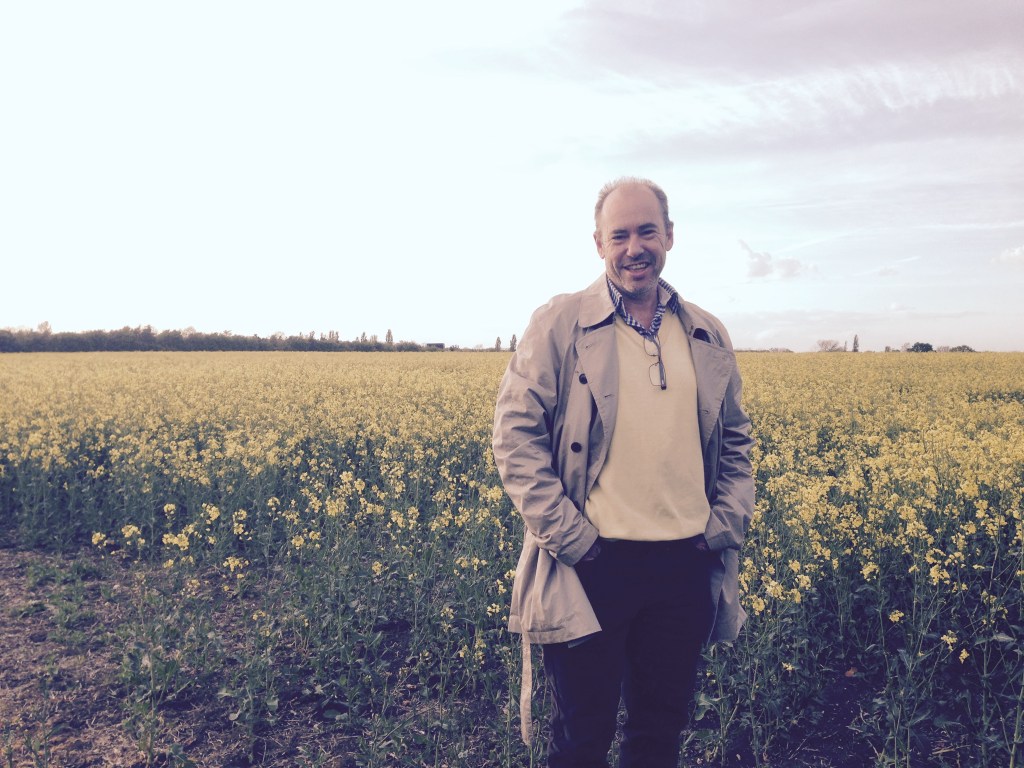
Nic Stuart was working as a Bangkok-based Indochina correspondent for the ABC in the early 1990s when a car accident left him with traumatic brain injury (TBI) and disability. It took Nic years to recover and he is now using his experiences as a journalist and person with disability to found Ability News, a news website and community for people with disabilities, focusing on the National Disability Insurance Scheme (NDIS).
In this interview I talk with Nic about his unconventional route into journalism, his career before and after his TBI, his advice for early career journalists and his vision for Ability News.
JL: Can you tell me a little bit about how you decided to become a journalist?
NS: Basically, I had absolutely no interest in journalism. I did very well at school and got into Arts/Law at Sydney Uni. While at uni I realised there was more to life than study. My parents were intelligent left wingers and I rebelled by joining the Army Reserve. As part of being in the Reserve I was given the opportunity to go to London and while I was there, enrolled in the department of War Studies at Kings College London to do a postgraduate diploma and ended up completing the Masters. When I got back to Australia I didn’t know what I wanted to do but I didn’t want to be a lawyer or join the Army. The ABC were recruiting cadet journalists and was I incredibly lucky because Ian Wolfe who was the editor in charge of appointing people really loved people who didn’t come from backgrounds in studying journalism. I lucked into a career.
JL: Can you tell me about some of your career highlights to date?
NS: The career highlight was being the ABC’s youngest foreign correspondent in 1990.
JL: Can you discuss the genesis of Ability News?
NS: Ability News was very much the coming together of a number of different things. I became involved with the House With No Steps (now Aruma), Australia’s largest disability service provider and sat on their board. I was included on a small working group that was working to prepare the organisation for the rollout of the NDIS. I kept saying, wouldn’t it be great if we could tell people what we were doing and people would tell me to shut up and that it wasn’t the role of the organisation to tell people with disabilities how best to use the NDIS. When I went over to Cambridge [University, where Nic was a press fellow at Wolfson College] I was thinking about it and the trouble is that the NDIS is coming in and we don’t have anyone talking to people with disability about what it is that we need to be doing. At Cambridge I was studying the internet and what it was going to mean for journalism and its the death of the old model of journalism. People aren’t just waiting for the newspaper to tell them the way it is anymore, people are going out and seeking information. What we need to do is have information there that people can seek. The disability community has never been recognised as a community that needs to be serviced by journalists. It has been considered too difficult or too boring to present the information that people with disabilities need. Several charitable foundations have given us grants that will allow us to commence the website and to get it working.
JL: How are you going to make your content relevant to the greatest number of people possible, given that everybody has a unique experience of disability?
NS: If we focus on the NDIS, that is one key way of bringing the disability community together. We can say we are reporting about the NDIS. In order to make Ability News function as an organisation, we need to get support. We can say, look, there are other stories of people who aren’t part of the NDIS, we recognise them, recognise their need for support, while remaining focused on the NDIS. We are also focusing on Canberra so that we can get advertising support. I did try and establish this as a national organisation for about a year, nobody is going to cough up support and money, but by focusing on the ACT and the surrounding region, we got three organisations who are involved in disability in the ACT. Focus is the one word answer. We need to tell the broad story but before we can do that we need to find some way to get supported journalism and that requires focus.
JL: What is your grand vision for Ability News?
NS: The model we are implementing in the ACT is replicable in every state and territory. Once we get the ACT presence sorted and people understand what it is we are doing it will grow in two ways, geographically, we will end up having a series of hubs where people can find support relevant to their region. It will also provide hubs based around experiences of disability so that people with common experiences can connect regardless of geography.
JL: What advice do you have for early career journalists with disabilities?
NS: I can’t say ignore the disability, but feel that your disability is not a disadvantage, feel that it gives you some capacity. People with disability often have a well-developed sense of nuance and sensitivity that they have learned through their personal experience. The importance of journalism is not repeating the common mantras of a society, it is seeing the way the world really is and understanding the way things are happening and that is why people with disability can make great reporters and usually are great reporters.

 Hyperfocus
Leave a comment