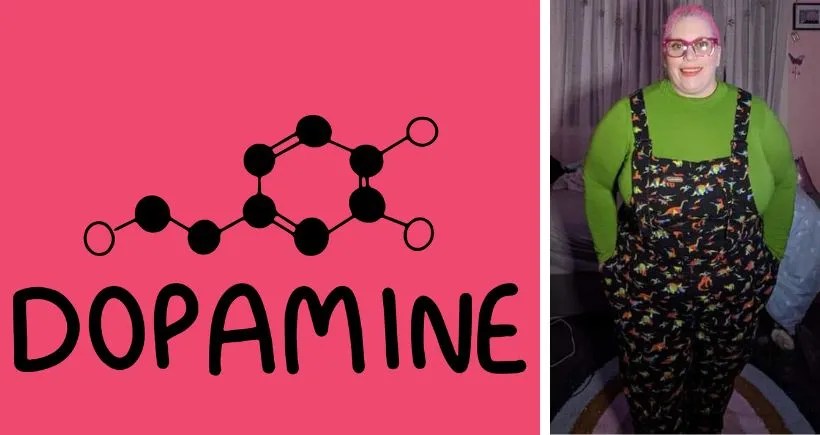
Dopamine dressing – it is the fashion trend of dressing for joy being talked about by everyone from Harper’s Bazaar to the ABC but for me, a neurodivergent, disabled, plus-sized woman, it is more than a trend, it is way to feel comfortable and confident in a world that does not accommodate my existence.
Exactly what constitutes dopamine dressing, beyond the nebulous idea of dressing for joy, is poorly defined but in the mainstream fashion press it has come to refer to bright colours, bold prints, and less commonly, comfortable items of clothing, such as dungarees.
Dopamine dressing is said to trigger the release of the the neurotransmitter dopamine, which is associated with feelings of pleasure and reward, when we experience these feelings we are likely to repeat the behaviours that triggered them, thus it has the potential to become more than a trend for those who embrace it.
As a person with ADHD, dopamine dressing has become a way of life, one that started years before it became a trend. The relationship between ADHD and dopamine is complex and not fully understood but it is widely accepted that people with ADHD have lower levels of dopamine that the general population. As a consequence, people with ADHD are chemically wired to seek out dopamine. For people with ADHD, including myself, dopamine dressing is a simple, effective method of self-regulation. The bright colours, bold patterns and comfort of dopamine dressing help me feel “normal”.
In addition to the boost dressing for joy provides, it also gives me a sense of control over how I present to the world. As a mobility aid user, and a plus-sized woman, I have little control over the first impression I create. Stereotypes abound regarding plus-sized women and mobility aid users and these caricatures strongly influence the impression I create but dopamine dressing allows me to take back some power, and some control, over my narrative.
Header image: Jac Lauren Hope


 Hyperfocus
Leave a comment